
Ageing is inevitable, but how we age is not entirely out of our hands. Decades of research now show that regular, well-prescribed exercise is one of the most powerful tools we have for protecting the body and brain as we grow older. At Lilydale Physio & Sports Medicine and Healesville Physio & Sports Medicine, we see this play out every day in clinic: patients who stay active move better, think more clearly, and recover faster from illness or injury than those who don't.
Below, we break down exactly what exercise does for six key systems in the body, and why an individualised program guided by an exercise physiologist or physiotherapist is one of the smartest investments you can make for your long-term health.
1. Nervous System: Keeping the Brain Sharp
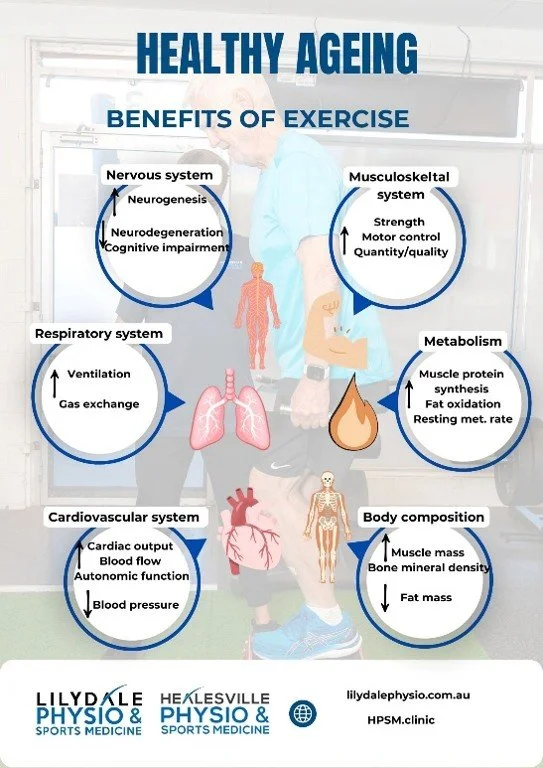
Exercise doesn't just build muscle it builds the brain. Aerobic and resistance training have both been shown to stimulate neurogenesis, the growth of new neurons, particularly in areas of the brain linked to memory and learning such as the hippocampus. At the same time, regular activity helps to slow neurodegeneration and reduce the risk of cognitive impairment, including conditions like dementia and Alzheimer's disease.
In practical terms, this means better memory, sharper concentration, improved mood, and a lower risk of falls-related confusion or delirium in older age. Balance and coordination-based exercises are especially valuable here, as they challenge the nervous system to adapt in real time.
2. Musculoskeletal System: Strength, Control and Independence
As we age, we naturally lose muscle mass and strength, a process called sarcopenia, unless we actively work against it. Structured exercise improves strength, motor control, and the quantity and quality of muscle tissue.
This translates directly into everyday independence: the ability to get up from a chair unaided, climb stairs confidently, carry groceries, and critically reduce the risk of falls and fractures. Resistance training two to three times a week is one of the single best things an older adult can do to preserve function and quality of life.
3. Respiratory System: Breathing Easier
Exercise conditions the lungs as much as it does the muscles. Regular aerobic activity improves ventilation (how efficiently air moves in and out of the lungs) and gas exchange (how effectively oxygen gets into the bloodstream and carbon dioxide is removed).
For older adults, this means more stamina for daily tasks, better resilience during respiratory illness, and reduced breathlessness during exertion. This is a particular focus of cardio-respiratory rehabilitation programs, where graded aerobic exercise is used to rebuild lung capacity and endurance after illness, surgery, or a period of inactivity.
4. Metabolism: Fuelling the Body Efficiently
Exercise has a profound effect on how the body uses energy. It boosts muscle protein synthesis (helping repair and build lean tissue), increases fat oxidation (the body's ability to burn fat for fuel), and raises resting metabolic rate meaning you burn more energy even at rest.
This metabolic boost helps manage healthy body weight, supports blood sugar regulation, and reduces the risk of type 2 diabetes and metabolic syndrome, both of which become more common with age.
5. Cardiovascular System: A Stronger, Healthier Heart
The heart is a muscle too, and it responds to training just like any other. Exercise increases cardiac output, improves blood flow, and enhances autonomic function (the nervous system's control over heart rate and blood pressure). Importantly, it also helps lower blood pressure, one of the biggest modifiable risk factors for stroke and heart disease.
Even moderate aerobic activity brisk walking, cycling, or swimming performed consistently can meaningfully reduce cardiovascular risk and improve heart health well into later decades of life.
6. Body Composition: Building Reserve, Not Just Losing Weight
Finally, exercise reshapes the body itself. Consistent training increases muscle mass and bone mineral density, while reducing fat mass. This shift is about far more than aesthetics. Muscle and bone are the body's "physical reserve," protecting against frailty, osteoporosis, and fracture risk as we age.
Maintaining strong bones and muscle is one of the best predictors of staying independent, mobile, and injury-resistant in later life.
The Takeaway: Exercise Helps All
What makes exercise so remarkable is that it doesn't just target one area of health it simultaneously protects the brain, lungs, heart, muscles, bones, and metabolism. Few, if any, other interventions can claim the same breadth of benefit.
The key is getting the right type, dose, and progression of exercise for your body, your goals, and any existing health conditions. That's where we come in.
How We Can Help
Our Exercise physiologist and Physiotherapists at Lilydale Physio & Sports Medicine and Healesville Physio & Sports Medicine specialise in designing safe, effective, and enjoyable exercise programs for healthy ageing. Whether you're managing a chronic condition, recovering from surgery, or simply want to stay strong and independent for years to come.
Ready to invest in your future mobility and health? Get in touch with our team to book an assessment and start your personalised healthy ageing exercise program.
Written by Ryan Brook (Exercise Physiologist)