
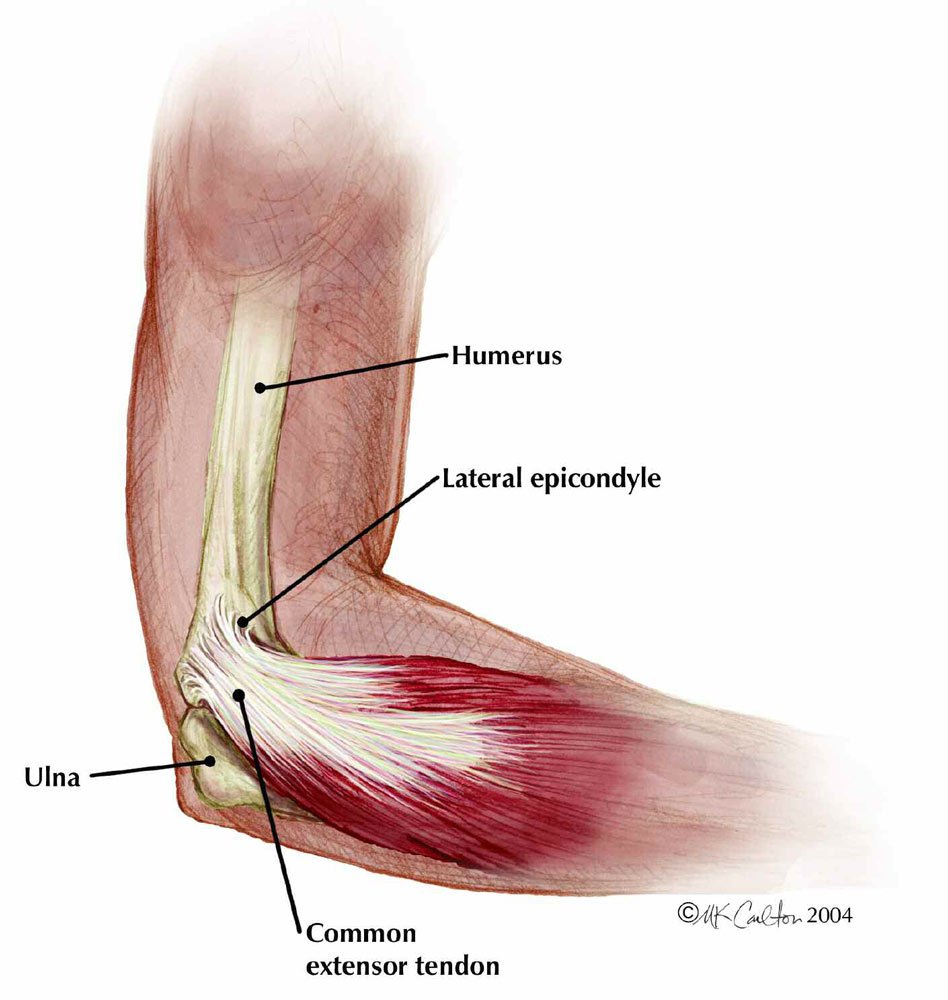
If you’re experiencing pain on the outside of your elbow with gripping, lifting, typing or playing sport, you may have tennis elbow, professionally known as lateral epicondylalgia. Tennis elbow is a tendon pathology which affects the common extensor tendon of the forearm. Despite its name, it commonly affects people who do not play tennis.
What causes Lateral Epicondylalgia (Tennis Elbow)?
Tennis elbow occurs when the tendons on the outside of your elbow are overloaded. This may be due to a sudden increase in lifting load, weakness or repetitive movements. Common factors that contribute to tennis elbow are:
Repetitive gripping or lifting
Manual/laborious work - commonly affects people that work in trades
Weight training
Prolonged time spent on the computer - typing and mouse work.
Sudden increase in upper limb activity/load
What are the symptoms?
Lateral Epicondylalgia is a condition that generally progresses over a period of time. It commonly presents with the following signs/symptoms:
Tenderness over the outside of the elbow, particularly when touching it
Pain with gripping and reduced strength with gripping
Pain with lifting or carrying objects
Discomfort during desk work, sport or everyday tasks
Reduced and painful wrist extension
When to see a Physiotherapist and what they can do to help?
You should seek the advice of a Physiotherapist if your pain doesn’t subside within the space of a week or two. It is also recommended if the pain is significantly impacting sport, work or general activities of daily living.
A physiotherapist will help assist you with activity modification and load management strategies to keep you doing the things you love, at a reduced load. Your physiotherapist may treat with manual therapy techniques or soft tissue massage. Shockwave Therapy is also a highly effective form of treatment, specifically targeting the tendon and reducing pain. Your Physiotherapist can also assist with prescribing an exercise program to assist with improving grip strength, forearm strength and tendon capacity.